

How do you improve AI search visibility?
Make useful public pages accessible to search systems, answer a real audience question with evidence, and measure the visitors and relevant actions those pages receive. No checklist can guarantee that an AI assistant will cite your website. The aim is to make your content worth finding and easy for readers to verify.
This AI-assisted checklist combines official search documentation with a suggested audit method, checked on November 13, 2026. The worksheet is a process to use on your own website, not a report of measured ranking gains.
1. Choose a question your website can answer well
Start with a problem your audience brings to you. For an AI tools website, 'Which free tool can help me organize a freelance proposal?' is more actionable than 'What is AI?'
Choose one existing page to serve the question. Record what useful material you can contribute: a documented workflow, a permitted example, a comparison with explained criteria, or firsthand observations you can substantiate. If the page only repeats provider descriptions, identify the missing reader decision before adding more text.
2. Check discovery and crawl access
Open the public URL without an admin session. Check that the main content is available, links lead to the intended pages, and the page is not accidentally excluded from indexing. Review the canonical URL, sitemap entry and robots rules through your normal website maintenance process.
OpenAI's crawler documentation distinguishes OAI-SearchBot, used for ChatGPT search, from GPTBot, associated with model training. Review those controls separately. A training permission is not a purchase of search visibility, and permitting a crawler does not promise a citation.
Keep private pages private. Public article access should not depend on exposing the admin or granting broader account access.
3. Make the answer verifiable
Answer the question near the opening, then support it with the explanation the reader needs. Give recommendations a reason: who the tool suits, what task it helps, what limitation matters, and where the underlying feature is documented.
Label hypothetical examples and distinguish documentation research from hands-on testing. If you did not test a product, do not claim benchmark scores or personal results. Where prices or feature allowances matter, record the official source and date checked.
Google's AI search optimization guide keeps the focus on useful content and established SEO practices. It does not require a special AI text file or special schema to secure a place in generative results.
4. Give a visitor a useful next step
A citation is only the beginning of a visit. Someone comparing products may want a feature profile; someone learning a process may want a worked example. Put that next step beside the explanation that makes it relevant.
For example, a reader choosing editing software can continue to an AI SEO tools comparison. A reader preparing content can use our AI blog writing workflow. Avoid filling the page with unrelated recommendations just to generate clicks.
5. Separate visibility, reading and action
| Stage | Evidence to collect | What it can tell you | Limitation |
|---|---|---|---|
| Search discovery | Search Console queries, impressions and clicks | Which pages attract Google search visits | Search performance is not a complete record of every AI citation |
| AI referrals | Available referrer or source reports in analytics | Which identifiable sources send visits | Some apps and journeys omit referral information |
| Reader engagement | Active reading milestones and article progress | Whether visitors spend observable time with the content | An open page does not prove comprehension |
| Useful action | Tool visits, relevant internal clicks or confirmed signups | Whether the next step fits the reader's task | A click does not establish a purchase or satisfaction |
The Search Console performance report explains its query, page, click and impression measurements. Compare those with your own on-site outcomes rather than treating any single metric as success.
6. Keep a repeatable audit worksheet
For each page, record:
- The reader question and canonical URL.
- The evidence, source dates and original contribution.
- The last content change and what problem it addressed.
- Search clicks, available referral visits and engaged reading for a defined period.
- Relevant next-step clicks, with a clear definition of what counts.
- One proposed improvement and the date you will review it.
Use comparable periods and note changes in demand, distribution or publication frequency. For manual AI-search checks, keep the question, service, date and displayed sources. Results can vary, so label these as observations rather than a universal rank.
Common questions
Do I need separate pages for SEO and AI search?
Usually the same helpful page should serve both. Create another page when it answers a distinct reader task, not just a different phrasing of the same keyword.
Does adding frequently asked questions guarantee AI citations?
No. Add questions when they resolve real uncertainties. The format alone is not evidence of quality or a guarantee of visibility.
What should I improve first?
Start with a page that is accessible and already receives relevant impressions or visits. Fix its most important unanswered question, make its evidence clear, and offer a next step that fits. Then observe the results before scaling the approach.
Explore related tools
Content optimization and SEO writing platform with data-driven guidance
Check the provider’s current pricing and terms before subscribing.
All-in-one SEO, keyword research, and content marketing suite with AI
Check the provider’s current pricing and terms before subscribing.
Related Posts
Keep reading

Best AI SEO Tools for Small Business: What to Choose
Choose an AI SEO tool around your next task: finding keywords, improving a draft, or measuring results. Compare the options and use a repeatable evaluation worksheet before paying.
Read article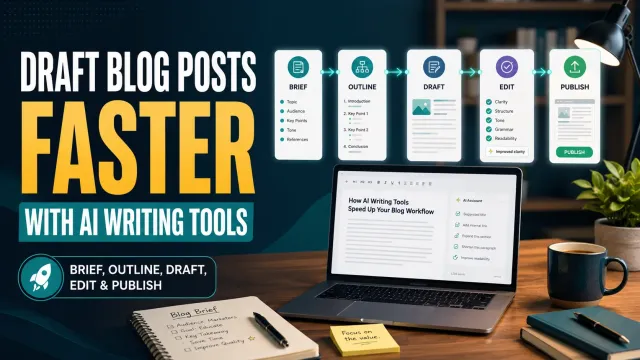
How to Write a Blog Post with AI: A Practical Workflow
A practical workflow for turning your own facts and experience into an AI-assisted blog post, with a copyable brief, verification steps and a clear next action for the reader.
Read article