
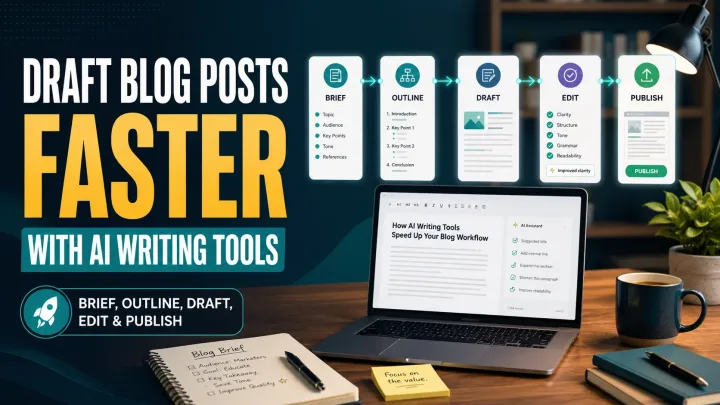
Step 1: Build a Brief
Before opening an AI writer, write a short brief with the audience, search intent, business goal, outline, product examples, and point of view. The brief is what keeps the draft from becoming generic.
Step 2: Generate a First Draft
Ask for a structured draft with headings, transitions, examples, and a clear conclusion. Do not ask for a finished article immediately. Ask for a draft that is easy to edit.
Step 3: Add Experience
Add firsthand details: screenshots, pricing checks, limitations, product context, examples from your own workflow, and practical judgment. This is the part that makes the article useful instead of recycled.
Step 4: Tighten and Verify
Check claims, remove vague phrases, add internal links, confirm tool pricing, and make sure every recommendation matches a real use case. AI can speed up structure, but accuracy and trust still come from editorial review.
Conclusion
AI drafting works best when it accelerates your thinking instead of replacing your editorial standards. Use the tool for structure and momentum, then make the final piece specific, current, and accountable.
Tools Mentioned
Jasper AI
Marketing AI platform for brand-safe campaign content
This visit is routed through AIToolNest so we can keep tool links accurate and measure interest.
Copy.ai
GTM AI platform for sales copy, workflows, and marketing drafts
This visit is routed through AIToolNest so we can keep tool links accurate and measure interest.